For Greg Corrion, finding the right career path took some unexpected turns. After initially pursuing nursing in college, Greg realized that the transition to online learning during COVID-19 was making it difficult for him to retain the information he needed. At the same time, he was working long hours and began looking for a career that would allow him to work hard, earn a living and have more time for himself, his family and the things he enjoys.
Trucking eventually caught his attention through family members who were already involved in the industry. Greg liked the idea of having a job where he could work independently while still being part of a company and answering to a supervisor. When he moved into his new home, he noticed that Tri-Area Trucking School was very close to his home and he passed it almost every day. After looking into the program, he decided to apply and begin a new career path.
Today, Greg works as a local beverage delivery driver for a unionized company. His position allows him to be home every night, spend his weekends with family and enjoy the hobbies that are important to him. While his journey through CDL training was not always easy, Greg credits the instructors, repetition and hands-on experience at Tri-Area with helping him build the confidence and skills he needed to move forward. From overcoming nerves during testing to learning how to maneuver a truck and eventually finding his place in local trucking, Greg’s experience shows how staying committed through challenges can open the door to a career that fits the life you want.
Tell us a little about yourself. What were you doing before attending Tri-Area Trucking School? I grew up in Midland and have lived there my whole life. Before trucking, I actually started out pursuing nursing in college. When COVID hit and everything moved online, I realized that I wasn’t retaining the information the way I needed to. I started questioning whether nursing was really the right path for me, and eventually I decided to move in a different direction. At that point, I was usually working two jobs and putting in anywhere from 50 to 65 hours a week. I was making decent money, but I really didn’t have much time for myself. I didn’t have much time for hobbies, friends or just doing things outside of work. I knew I wanted to find something that would still allow me to work hard and make a living, but hopefully give me more balance and a little more freedom with my time.
What made you decide to pursue a career in trucking? I had family members who were already involved in trucking, so I had heard about the industry before. One of them worked managing drivers and another was an actual driver, so I would hear them talk about their jobs and what they did. That started getting me interested in it. One of the biggest things that appealed to me was the independence. I liked the idea of having a boss and being part of a company, but still being able to go out and do my job on my own without someone standing over me all day. I liked the idea of being responsible for myself, working at my own pace and figuring things out as I went. After spending so much time working, I also liked the idea of finding a career where I could work hard but potentially have more control over my schedule and my life outside of work.
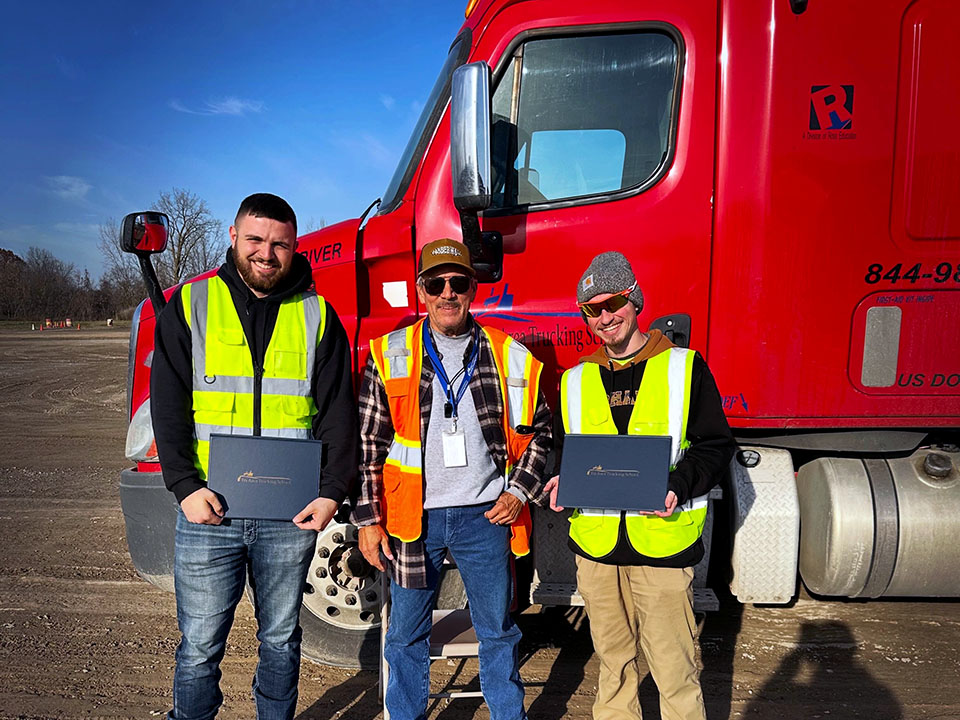
How did you first hear about Tri-Area Trucking School? After I moved into an apartment in Freeland, I realized Tri-Area was really close to me. I passed the school almost every day. Since I was already thinking about trucking, I started looking into the school and seeing what the program was all about. It was convenient because it was right there, but I also wanted to make sure it was something I actually wanted to do before committing to it. I ended up applying, starting the program and eventually graduating.
What made you choose Tri-Area for your CDL training? The location definitely made it convenient, but once I looked into the program, I also liked the fact that I would be getting actual hands-on training. I didn’t want to just read about how to drive a truck. I wanted to get behind the wheel and learn how to actually do it. I also liked that the training gave us a chance to practice the things we would eventually have to demonstrate on the state test. Looking back, I think that hands-on practice was one of the most important parts of the entire experience because by the time I got to my test, I had already done many of the maneuvers so many times that they felt familiar.
What was your experience like while going through the training program? When I first started, everything was unfamiliar. I knew a little bit about trucks and had some general knowledge because of my family, but I had never actually driven a truck before. I was also pretty nervous about the testing portion. During the first week, we were learning the different information we needed for the Michigan Secretary of State testing, including things like air brakes and combination vehicles. Even though I was doing well in class, I was extremely nervous about having to actually take the test. By the end of the first week, I was so overwhelmed that I almost quit. I went into Jason’s office and talked with him about it, and he helped calm me down and reminded me that I was doing better than I thought I was. I ended up taking the test and passing it on my first try, and my class test scores were around 95% or higher. That was a big moment for me because I tend to be an overachiever and put a lot of pressure on myself, so sometimes the biggest challenge was getting out of my own head.
Was there anything about the training or your instructors that stood out to you? There were a couple of instructors who really stood out to me for different reasons. Jason was our classroom instructor, and he was very good at explaining things and taking his time when someone didn’t understand something. If somebody needed something reviewed or explained another way, he was willing to go over it again. That was helpful for everyone because even if you thought you understood something, hearing it explained again gave you another opportunity to make sure you really had it down. Jim was our yard instructor, and he was very particular about how we drove and how we did things. At the time, some of the things he made us do could feel difficult, but looking back, I understand why. He made the training challenging so that when we got to the state test, we were prepared for it. A lot of what Jim taught me is still something I think about and use today. By the time I took my state test, I had done the maneuvers so many times that passing didn’t really feel like a question anymore.
What was the most valuable thing you learned during your time at Tri-Area? One of the biggest things was learning how important repetition is. There was a lot of information to remember, especially when it came to the inspections and everything we needed to know for testing. We did the walk-around and in-cab inspections repeatedly, which I think helped because you can’t just hear something once and expect to remember every detail. I would take the handouts home, read through them over and over, cover them up and try to memorize different sections, and then eventually work toward remembering the entire sheet. Repetition was a huge part of how I learned. You still have to put in the work and study, but having that information reinforced again and again made it much easier to remember when I needed it.
Was there a particular challenge during training that you had to overcome? There were a couple of times when I seriously questioned whether I was going to finish. The first was during that first week when I was so nervous about the testing that I almost quit. Then, during the third week, I had another moment where I almost gave up. I had been getting the hang of the maneuvers and things seemed to be clicking, but then one Friday it just felt like everything stopped making sense. I was frustrated because I had been doing well and suddenly I felt like I couldn’t do anything right. I knew, though, that I still had another week of training, so I decided to stick with it instead of walking away. I kept practicing and studying, and things eventually came back together. I ended up doing fine. Looking back, I think those moments taught me that just because something feels difficult on one particular day doesn’t mean you’re not capable of doing it. Sometimes you just have to keep going and give yourself another opportunity to figure it out.
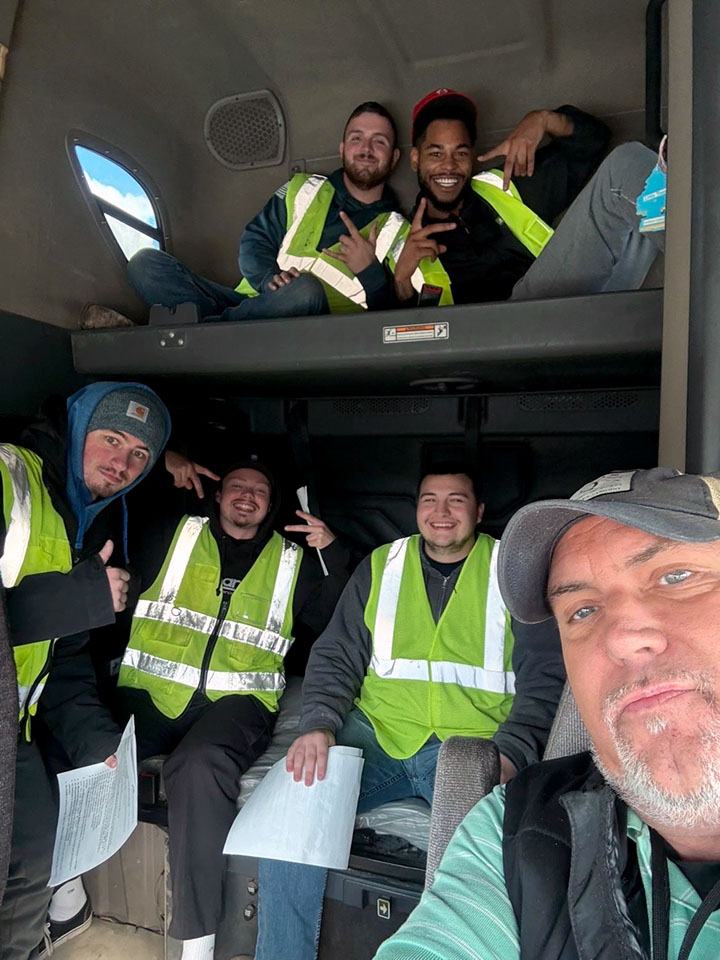
How did the hands-on training help you prepare for your CDL test? The yard training was a big part of it. There were only two students in the yard when I was training, and both of us picked things up pretty quickly, so we had a lot of opportunities to practice. I had already driven a manual car, so I understood how a manual transmission worked. The part I really had to learn was double clutching and applying that knowledge to a truck. Tri-Area also made the parking areas and maneuvers a little smaller and more difficult than what we would eventually encounter on the state test. At the time, you might wonder why you’re being asked to do something that way, but when I got to the state test the following week, it felt like a breeze because I had already practiced in a more challenging environment. The school also emphasized inspections over and over again, which helped make them feel more natural by the time I had to demonstrate them.
Why was learning to drive a manual truck important to you? I think it was really valuable because if you don’t learn how to drive a manual during training, you can end up with a restriction on your CDL that prevents you from driving a manual truck. Most of the trucks I’ve come across in my local work are automatics now, but that doesn’t mean every truck you’re going to encounter will be. Having the ability to drive a manual gives you more options. Even if you don’t end up using that skill every day, it’s better to have learned it when you had the opportunity rather than finding out later that you need to learn it before you can take a different job.
How did Tri-Area help prepare you for your career after graduation? I finished the course around the middle of November, and within a week or two I had an opportunity to interview for a job. I got the job, and the company gave me additional training rather than just putting me in a truck and sending me out on my own. That was important because there is a big difference between knowing how to pass a CDL test and knowing how to do the job in the real world. My training at work lasted about two or three weeks, and I learned a lot by watching experienced drivers and then getting out there and doing it myself. I was extremely cautious when I first started, and if I wasn’t comfortable with something, I would choose the safer or easier way to get in and out of an area rather than forcing myself into a situation I wasn’t ready for. Over time, I gained experience and became more comfortable.
What are you doing now? Tell us about your current career or trucking position. I currently work in local beverage delivery for a unionized company. I’m a swing driver because I’m the newest employee, so seniority plays a big role in how routes are assigned. I work four days a week and don’t work Mondays, so I have my weekends off, which I really enjoy. The job is busy, but that’s actually something I prefer. We’re paid by the case rather than strictly by the hour, so if you’re working hard and moving quickly, your equivalent hourly rate can be pretty good. I would rather stay busy and get the work done than sit around waiting for something to happen. There are days when you’re working for 10 or 12 hours, but because you’re constantly moving and doing something, it can feel more like six or seven hours. I know some people prefer an hourly position where they don’t mind waiting around, but for me, I like having something to do.
What is it like working as a local beverage delivery driver? A big part of the job is getting familiar with your routes and the places you deliver to. We have stores that we visit every week, some that we visit every other week and others that might be on a monthly schedule. You start getting familiar with the same areas, the same customers and even the hours that different stores are open. After you’ve been on a route for a month or two, you can almost do it automatically because you know where you’re going and what you need to do. You don’t necessarily need GPS anymore because you know the area and you know the stops. Our company also re-bids routes periodically, so drivers can eventually move into different assignments as they gain seniority. The drivers who have been with the company for 20 or 30 years can have bulk routes where they are delivering larger quantities to places like Walmart or Kroger using motorized pallet jacks. There is a progression to it, and you have to put in the time with the company to eventually have access to those different assignments.
What do you enjoy most about working in the trucking industry? I like the independence, and I like being able to work on my own while still being part of a company. I also enjoy the relationships you build with the people you see regularly. I’m not necessarily becoming friends with every receiver or customer, but when you’re going to the same places every week, you get to know people and they get to know you. That makes the job smoother. You know who you’re dealing with, you know the area and you know what to expect. I also really like being home every night. I’ve always worked locally, and I don’t see myself wanting to go over the road because I don’t want to be away from my family for weeks at a time. I like being able to finish work, go home, sleep in my own bed and have my weekends available.
What was the transition like from training to working in the real world? One of the biggest things I learned was that you have to pay attention to how other drivers do things. When you’re new, you don’t always know the best way to approach a particular stop. You can watch an experienced driver and see whether they back into an area, pull in and back out, drive around the building or use a different setup. You learn a lot just by watching and asking questions. I also learned from my own mistakes. There were times when I parked in a position that wasn’t ideal and then realized I had to back out into traffic in a way that wasn’t comfortable. Those situations taught me to think ahead and set myself up for success before I ever put the truck in a difficult position. The more experience you get, the more you start thinking about what you’re going to have to do next instead of just focusing on what you’re doing right now.
What is one of the most important things a new driver needs to learn? You have to know your truck. You need to understand what it can and can’t do, where your blind spots are, how wide you need to turn and how the truck is going to maneuver in different situations. You can’t just assume that because you’ve driven a car for years, you’ll automatically know how a truck is going to move. The size of the vehicle changes everything. You have to understand the space you’re working with and think ahead. That’s something you develop with practice and experience, but the more aware you are of your truck, the more comfortable and confident you’re going to become.
Can you give an example of something you learned at Tri-Area that has helped you on the job? There have been things that come up where I realize I learned about that exact situation in class. One example was when I was working at Griffin and noticed that the truck was smoking from the exhaust even though it was warm outside. I remembered what we had learned about the truck’s exhaust and regeneration process, so I knew that I needed to let the truck run and allow the process to finish rather than immediately assuming something was seriously wrong. It smelled bad and I couldn’t just take off and go somewhere while it was happening, but because I had learned about it in class, I understood what was going on. Those are the kinds of things you don’t necessarily realize are going to be important until you’re actually out there working and something happens.
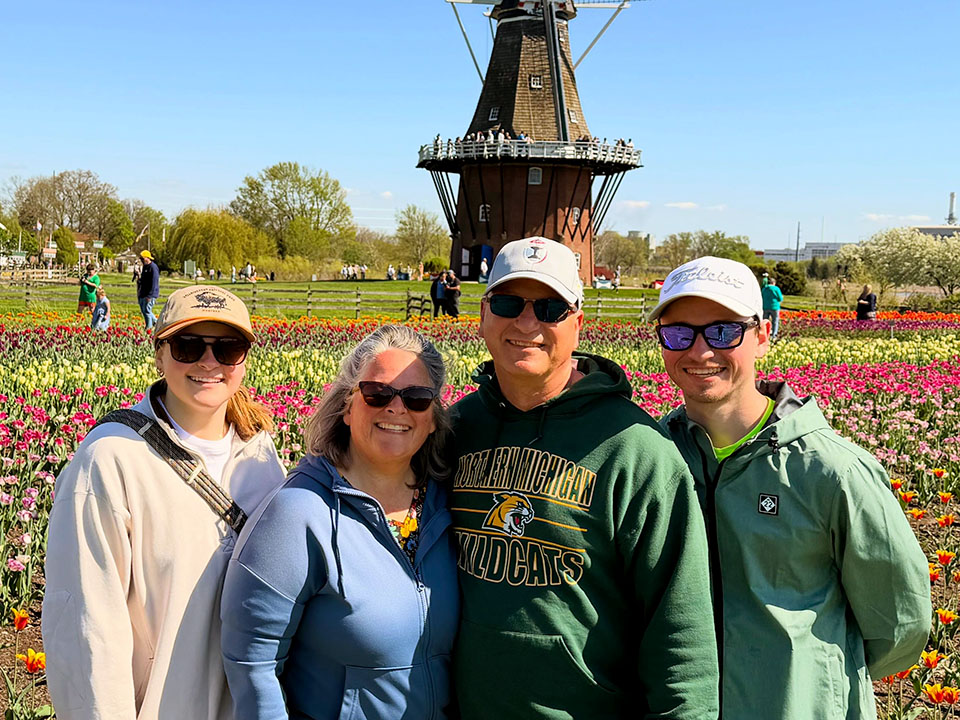
How has earning your CDL changed your career opportunities or your life? Getting my CDL gave me an opportunity to move into a career where I can work hard, make a living and still have time outside of work. I’m home every night, I have weekends off and I have more time for the things I enjoy. I play a lot of golf during the summer, sometimes almost every day that I don’t work, and I also enjoy cars and going to car shows. I get to spend time with my family, and that’s important to me. During the winter, there isn’t quite as much to do, so I spend more time with family, stay home and save money, especially when the roads aren’t great. Having that time is something I didn’t really have before, and it’s one of the things I appreciate most about where my career has taken me.
What advice would you give someone who is considering attending Tri-Area Trucking School? Use as many resources as you possibly can. The instructors are there because they want you to succeed, so if you don’t understand something, ask questions and let them help you. You also have to study, even if studying isn’t something you enjoy. Try to retain as much information as you can because you’re going to need it. Most importantly, get behind the wheel and actually try. You can read about something and listen to someone explain it, but there comes a point where you have to actually get in the truck and practice. That’s how you’re going to learn. Don’t get discouraged if something doesn’t click immediately. Keep practicing and give yourself time to improve.
Do you have any advice for someone who is just starting their trucking career? Before you start applying for jobs, think about what kind of lifestyle you want. Do you want to be home every night, or are you interested in going over the road and traveling? Once you figure that out, apply to as many companies as you can that fit what you’re looking for, and ask a lot of questions. When I was getting started, I talked to other drivers and asked them about their companies, their benefits, their hours and what they were getting paid. You can learn a lot just by talking to people who are already doing the job. You can also look at the equipment a company is using. Sometimes you can tell a lot about a company by looking at the trucks and trailers, whether the equipment is newer, how well it appears to be maintained and whether drivers are constantly dealing with breakdowns or repairs.
What should new drivers know about choosing their first trucking company? I think it’s important to understand that your first job isn’t necessarily going to be your forever job. As a new driver, you may not immediately get hired by the company you consider the best or most reputable. Sometimes you have to take an entry-level opportunity, get some experience and then move on when you’re ready. My first job was okay because it got me working, but it wasn’t necessarily one of the best companies out there. You have to get that experience somewhere. At the same time, I don’t think you should just settle permanently if you know there are better opportunities available. Keep asking questions and talking to other drivers so you can learn what different companies offer and decide what makes sense for you.
What have you learned about the differences between union and nonunion trucking jobs? My first job was not unionized, and the job I have now is. From my experience, there are differences in how things are handled. With a nonunion company, you generally have to accept the way the company chooses to handle things, while with a unionized company there is collective representation and an established structure around things like wages, hours and benefits. There are also union dues, so it’s not as simple as saying one is automatically better than the other. You have to look at the entire package and decide what works for you. I personally like where I am now. I have good benefits, I’m home every night and the schedule works well for my life.
What should new drivers know about sign-on bonuses? I would tell people to ask questions and read the details before accepting a sign-on bonus. Some companies don’t necessarily give you the entire bonus all at once. They may pay it out over a period of time and require you to stay with the company for two or three years. If you leave early, you could potentially have to pay some or all of it back depending on the agreement. I didn’t have a sign-on bonus at my first job, so I don’t know the exact details of every company’s program, but it’s something I would definitely ask about before making a decision. A bonus can sound great when you first hear about it, but you need to understand the conditions attached to it.
What are your thoughts on over-the-road trucking? I don’t have personal over-the-road experience because I’ve always worked locally, but I’ve talked to people who do it. Some people really enjoy traveling and seeing different states, and there are drivers who like that lifestyle. Depending on the company and the type of work, some drivers can request loads that take them near places they want to visit, and they may have time during a layover to explore. There can also be opportunities to increase your earnings as you gain experience and seniority, depending on the company and position. For me personally, though, I don’t think that’s the lifestyle I want. I don’t want to be gone for two or three weeks and then only home for a few days. I would rather stay local, be home every night and have time with my family.
Looking back, what are you most proud of about your journey from student to graduate? I’m proud that I finished. There were definitely moments when I felt defeated and wondered whether I was going to make it through, especially because I had never driven a truck before and I put a lot of pressure on myself. The testing made me nervous, and there were times during the maneuvering portion when things weren’t clicking the way I wanted them to. But I stuck with it. I kept studying, kept practicing and kept pushing myself. The more time I spent behind the wheel, the better I became at maneuvering and driving the truck. Eventually, something that had seemed completely unfamiliar became something I could do confidently. That experience taught me that sometimes you’re capable of more than you think you are, but you have to give yourself the opportunity to prove it.
What do you hope your trucking career looks like in the future? I want to continue working locally and building my experience. I don’t have plans to go over the road because being home every night is important to me. I like my current schedule, I like having weekends off and I like having time for my family and the things I enjoy outside of work. At the same time, I don’t want to stop improving. I’m always interested in learning more and seeing what opportunities are out there. I don’t want to settle just because I’m comfortable somewhere. I think it’s important to keep asking questions, keep learning from other people in the industry and continue looking for ways to make your career better.
Greg’s journey into trucking was not a straight line. He began his career planning to pursue nursing, eventually discovered that path wasn’t right for him and found himself drawn to an industry that offered the independence and hands-on work he was looking for. After discovering Tri-Area Trucking School close to home, he took a chance on a new direction, worked through the challenges of CDL training and learned to push through the moments when he wasn’t sure he could succeed.
Today, Greg has built a local trucking career that fits the lifestyle he wants. He is home every night, has time for his family and hobbies, and continues to look for ways to grow and improve. For Greg, earning his CDL was more than learning how to operate a truck. It was a step toward creating a career that gives him independence, experience and the opportunity to keep moving forward.